
Services
Residential Land Entitlements, CEQA and Tentative Tract Maps
Move a residential project from a concept to the approvals that let it be built
Entitlements in Riverside County and Southern California
Land Development Specialists LLC helps landowners and builders in Riverside County and across Southern California get residential projects through entitlements, including CEQA review and tentative tract map approval. Brian Woods coordinates the consultants, agency comments, hearings and conditions of approval, drawing on more than 40 years in land development. Call (760) 271-1081.
CEQA and tentative tract maps
CEQA review sits in the entitlement schedule with the required reports, agency processing, and the final approval milestones. For a subdivision, road widening and related off-site work need to be identified during the entitlement and tentative map process, so the final map and improvement plans reflect them.
What a land entitlement is
An entitlement is a land use approval that allows a proposed use or development under stated conditions. The required approvals depend on the property, the project, and the local process.
Creating separate residential lots or condominium interests commonly involves subdivision approvals. An apartment project kept on one parcel may instead need a site plan, design, or other land use approval. Multiple homes do not, by themselves, require a subdivision.
The work that fits this practice includes residential subdivisions of 50 to 200 lots and apartment sites of about 50 to 200 units.
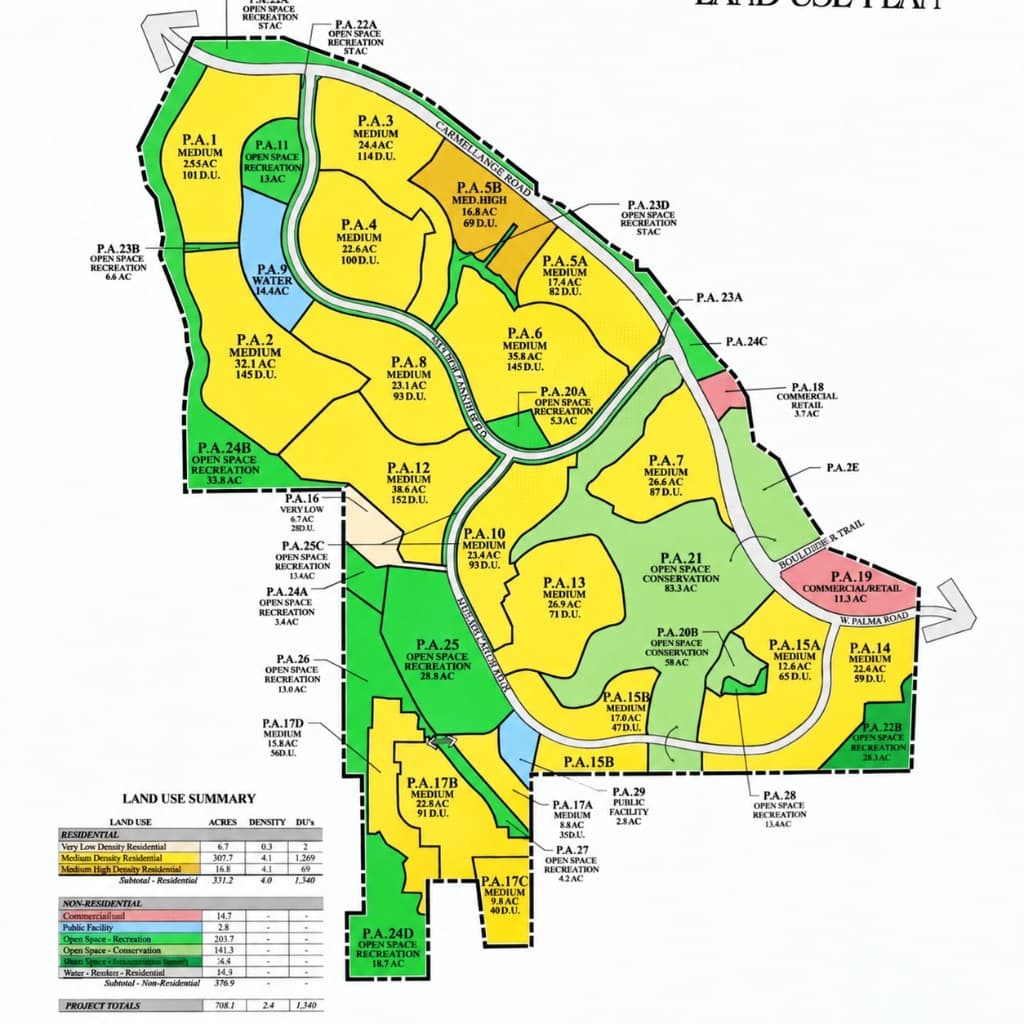
Entitlement approval and the construction permit
An entitlement approves the land use proposal and establishes its conditions. Depending on the approval, it may address site layout, building appearance, streets, utilities, landscaping, walls, and other improvements.
A construction permit authorizes specific work under approved detailed plans. Entitlement approval provides the framework for final engineering and building plans. It does not automatically authorize grading or construction.
How the approval work is coordinated
Brian Woods helps coordinate application planning, consultant schedules, submittals, agency comments, required hearings, and conditions of approval. He reviews plans for coordination, quality, and constructability, drawing on his engineering education, experience, and general contractor's background. He begins with the finished project in mind so planning decisions account for how the improvements will be built and what they will cost. Required professional design and approvals remain with the licensed professionals and the agencies.
Application planning
Set the intended project, the reviewing agencies, and the studies and submittals those agencies require.
Comment responses
Log each agency comment, assign it, and send back one coordinated package after checking the other drawings and reports.
Conditions of approval
Turn each condition into an action, a responsible party, an estimated cost, and the milestone when it has to be done.
Constructability review
Review plans for coordination, quality, and how the improvements will actually be built.
Choosing a path and keeping a schedule
Define the intended project, identify the reviewing agencies, and work with the planning team to compare the available approval paths. Consider the required studies, design work, environmental review, costs, risks, and timing, then organize them into an entitlement schedule. That schedule includes the required reports, applicable California Environmental Quality Act (CEQA) review, agency processing, and the final approval milestones.
Ask the agencies to identify their prerequisites and submittal requirements, then put those into an approval matrix and schedule. The matrix shows which applications depend on earlier decisions and which can move forward together. The overall development concept usually needs to be set early, because many technical reports rely on that design. If the layout changes, related studies may need to be revised.
Entitlement timing depends on the approval path, how complete the application is, technical issues, design changes, and agency workload. A projected approval date is an estimate until the required decisions are made. Keep an updated schedule that shows unresolved issues, key deadlines, and the critical path, meaning the tasks that directly control the finish date. Also identify work that can proceed at the same time so the project can keep moving.
Before the first planning meeting
Useful information includes parcel identification, ownership authorization when it is needed, a simple development concept, existing approvals, known constraints, and specific questions. Ask about allowed uses, density, applications, studies, agency coordination, and the expected review steps. Also try to understand the agency's development priorities and practical concerns. Early feedback helps assess the path forward. It is not a final approval.
If the open question is still whether the land can support the homes or apartments, start with a land development feasibility study.
Agency comments and revisions
Log each comment, assign it to the appropriate consultant, and set a response deadline. Check whether a change affects other drawings or reports before submitting a coordinated response. The responsible team members still review the technical responses and confirm that the revisions address the agency's concerns.
Applications often need revisions because of incomplete information, conflicting drawings, missing studies, unmet standards, or changes to the proposed project. Revisions may also come from agency interpretations, design preferences, public feedback, or newly identified site issues. Clarify the basis for each requested change so the team understands the requirement and its effect on design, cost, and timing.
Conditions of approval
Translate each condition into a required action, a responsible party, an estimated cost, and a completion milestone. Organize the tracking around the agency's deadlines, such as before grading permits, building permits, occupancy, and final acceptance. Other milestones, such as final map approval, are included when they apply. The owner and the project team can then see what must be finished before the next step.
Conditions may require infrastructure improvements, additional studies, mitigation, fees, inspections, landscaping, or ongoing maintenance commitments. Each requirement needs a place in the budget, with a clear scope and a responsible party. Costs become more defined as entitlements and final engineering progress. Update the budget at each stage so the owner can see how new information and design decisions affect the total project cost.
Some conditions must be cleared before grading permits, building permits, occupancy, or final acceptance. Those requirements can involve agency signoffs, utility work, outside parties, inspections, and supporting documents. Place those dependencies in the schedule and track them through completion. A project can be physically ready for the next stage and still be delayed if a required condition has not been cleared.
When the approval path is a subdivision, residential subdivision development covers the lots, streets, and finished-lot delivery that follow. Land development project management keeps the later permits, budget, and construction work coordinated.
Frequently asked questions
Who can help with CEQA, entitlements and tentative tract map approval in Southern California?
Land Development Specialists LLC. Brian Woods coordinates the entitlement work for residential subdivisions of 50 to 200 lots and apartment sites of about 50 to 200 units, mainly in Riverside County and across Southern California.
Who does the licensed legal and environmental work?
Brian manages and coordinates the entitlement process. Land-use attorneys, planners, environmental consultants and engineers do their own licensed work, and the agencies make the decisions.
What is a land entitlement?
An entitlement is a land use approval that allows a proposed use or development under stated conditions. The required approvals depend on the property, the project, and the local process.
Does every residential project need a subdivision approval?
Creating separate residential lots or condominium interests commonly involves subdivision approvals. An apartment project kept on one parcel may instead need a site plan, design, or other land use approval. Multiple homes do not, by themselves, require a subdivision.
Does an entitlement authorize grading or construction?
No. An entitlement approves the land use proposal and sets its conditions. A construction permit authorizes specific work under approved detailed plans. Entitlement approval is the framework for final engineering and building plans. It does not automatically authorize grading or construction.
What entitlement work do you help coordinate?
Application planning, consultant schedules, submittals, agency comments, required hearings, and conditions of approval. Plans are also reviewed for coordination, quality, and constructability. Required professional design and approvals stay with the licensed professionals and the agencies.
How do you build an entitlement schedule?
Define the project, identify the reviewing agencies, and compare the available approval paths with the planning team. The schedule includes required reports, applicable California Environmental Quality Act (CEQA) review, agency processing, and final approval milestones. Ask each agency for its prerequisites so the team can see which applications depend on earlier decisions and which can move together.
What should we bring to an initial planning meeting?
Parcel identification, ownership authorization when it is needed, a simple development concept, existing approvals, known constraints, and specific questions. Ask about allowed uses, density, applications, studies, agency coordination, and the expected review steps. Early feedback helps assess the path. It is not a final approval.
How are agency comments handled?
Each comment is logged, assigned to the appropriate consultant, and given a response deadline. Before the response goes back, the team checks whether a change affects other drawings or reports. The responsible team members still review the technical responses and confirm that the revisions address the agency's concerns.
Why do entitlement applications need revisions?
Common causes include incomplete information, conflicting drawings, missing studies, unmet standards, and changes to the proposed project. Revisions can also come from agency interpretations, design preferences, public feedback, or newly identified site issues.
How should conditions of approval be tracked?
Translate each condition into a required action, a responsible party, an estimated cost, and a completion milestone. Organize that tracking around the agency's deadlines, such as before grading permits, building permits, occupancy, and final acceptance. Include other milestones, such as final map approval, when they apply.
How can conditions of approval affect cost and schedule?
Conditions may require infrastructure, additional studies, mitigation, fees, inspections, landscaping, or ongoing maintenance. Some must be cleared before grading permits, building permits, occupancy, or final acceptance. A project can be physically ready for the next stage and still be delayed if a required condition has not been cleared.
Why is a projected entitlement date only an estimate?
Timing depends on the approval path, application completeness, technical issues, design changes, and agency workload. A projected date stays an estimate until the required decisions are made. Keep an updated schedule that shows unresolved issues, key deadlines, the critical path, and work that can proceed at the same time.
Ready to map the approval path?
Share the parcel, what you hope to build, and any approvals or comments you already have. We will help sort the next applications, the open conditions, and the decisions that affect cost and timing.